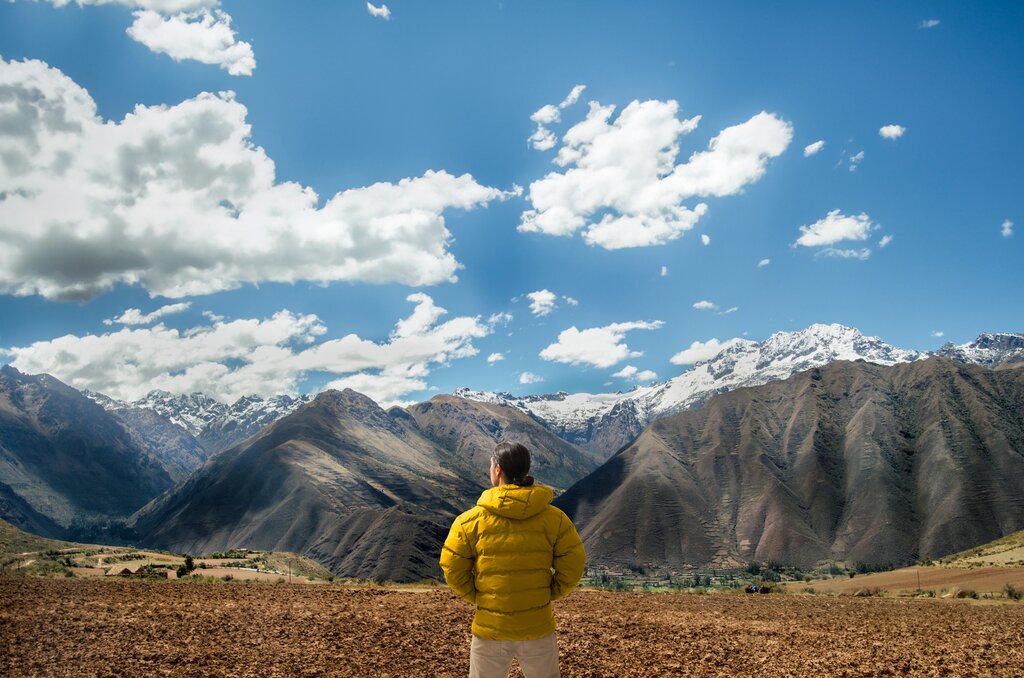



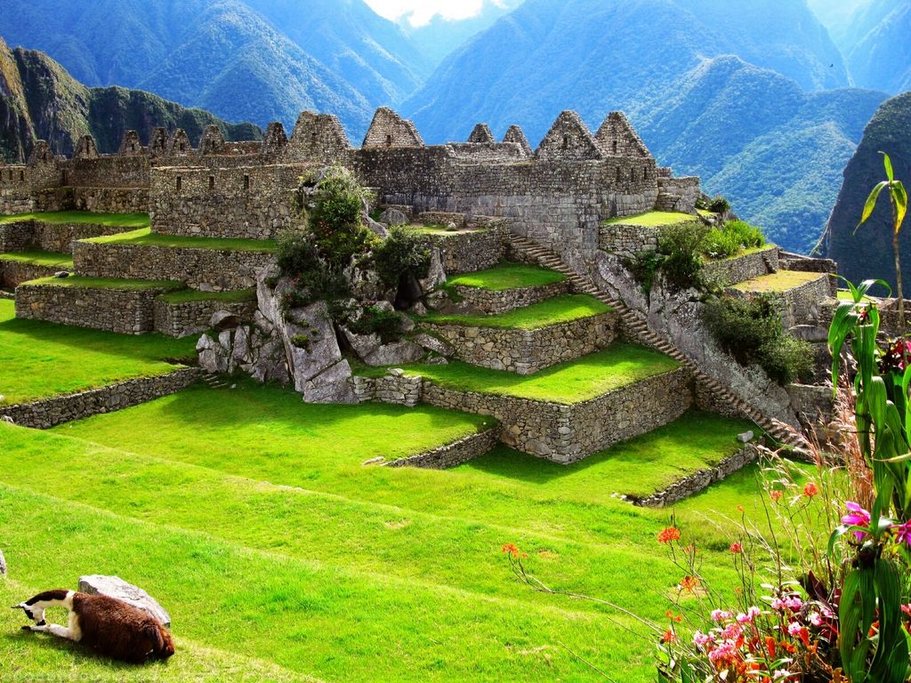
This colorful adventure around Bolivia and Peru introduces you to the best of both countries. You’ll start in Cusco, touring the high-altitude Inca city and exploring the Sacred Valley before moving on to the majestic ruins of Machu Picchu. Then fly to La Paz to discover Bolivia’s most beautiful landscapes, including the Salar de Uyuni salt flats and the floating islands of Lake Titicaca. Accompanied by llamas, you’ll hike around a lagoon on the last full day of the trip.
Highlights
- Discover ancient Inca ruins in the imperial city of Cusco
- Explore the beautiful landscapes of the Sacred Valley
- Marvel at the ruins of Machu Picchu
- Take unique photos at the Uyuni Salt Flats
- Cruise around Lake Titicaca on a catamaran
- 10 Days/ 9 Nights
- January to December
- Moderate
Difficulty

Condition
Travel Program
Day 1: Arrive in Cusco & Get Oriented
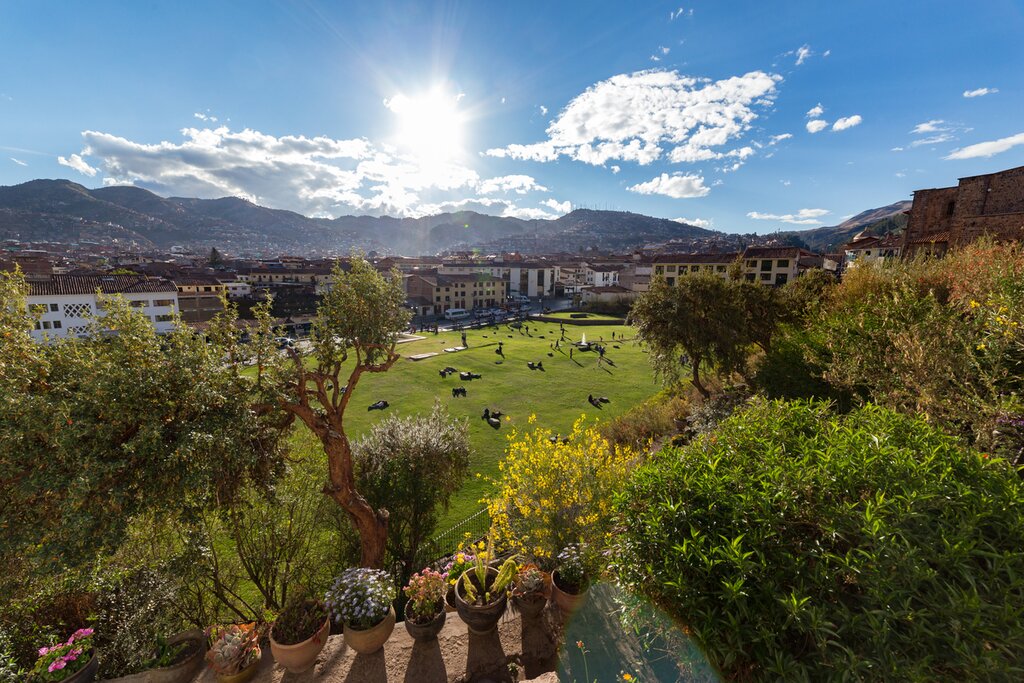
Welcome to Peru! Arrive in Cusco, the birthplace of the Incas. In the afternoon, you’ll have time for a relaxed walking tour of Cusco’s historic center. You will visit the Cathedral and Koricancha (Temple of the Sun) and the nearby ruins. These include Qenqo (where sacrifices were made), Puca Pucara, Tambomachay (also called “The Bath of the Inca“), and Sacsayhuaman Fortress, where Inca festivals like Inti Raymi and Warachicuy take place. As you adjust to Cusco’s high altitude today, it’s important to drink plenty of water and take it relatively easy.
Day 2: Tour Pisac & Ollantaytambo
Drive through the sunny and scenic Sacred Valley this morning, passing incredible terraces, ancient irrigation canals, and massive hilltop forts on the way to Pisac. Pisac’s bustling town square is home to the region’s largest and most famous craft market, and the surrounding streets are a maze of charming gardens, carved stone buildings, and hidden courtyards. Break for lunch in a beautiful setting overlooking the Urubamba River.
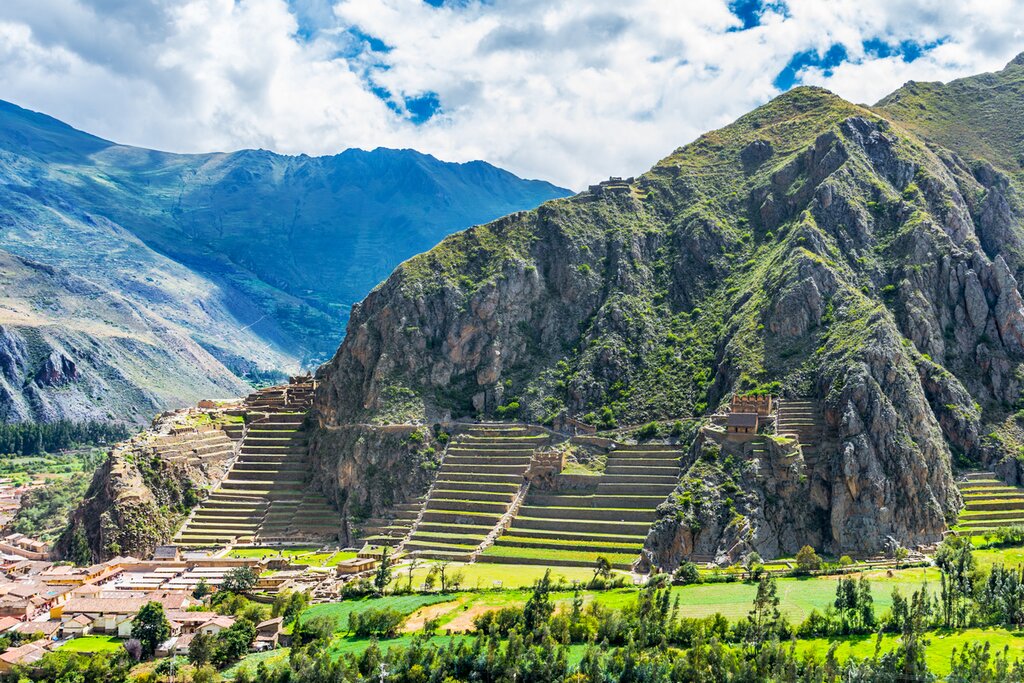
In the afternoon, you’ll wander through charming Ollantaytambo, perhaps the most perfectly preserved of all Inca towns. Its atmospheric cobblestoned alleyways and sun-drenched plazas are presided over by a spectacular llama-shaped ruin. You’ll then take the train to Aguas Calientes to spend the night.
Day 3: Visit the Ruins of Machu Picchu
Your day begins with an early morning bus ride up to the ruins of Machu Picchu. A spectacular stone city surrounded by incredibly steep green mountains, Machu Picchu needs no introduction: it’s one of the new Seven Wonders of the World. Your tour guide will lead you on an unforgettable walk through the old city’s stone-lined paths, along the terrace edges to the base of structures that testify to the extraordinary skill of its builders.
For 400 years, the so-called “lost city of the Incas” remained hidden atop a mountain ridge until it was revealed to the world on the pages of National Geographic in 1911. Later in the day, you’ll head back to Ollantaytambo and transfer to Cusco to spend the night.
Day 4: Sightsee in La Paz
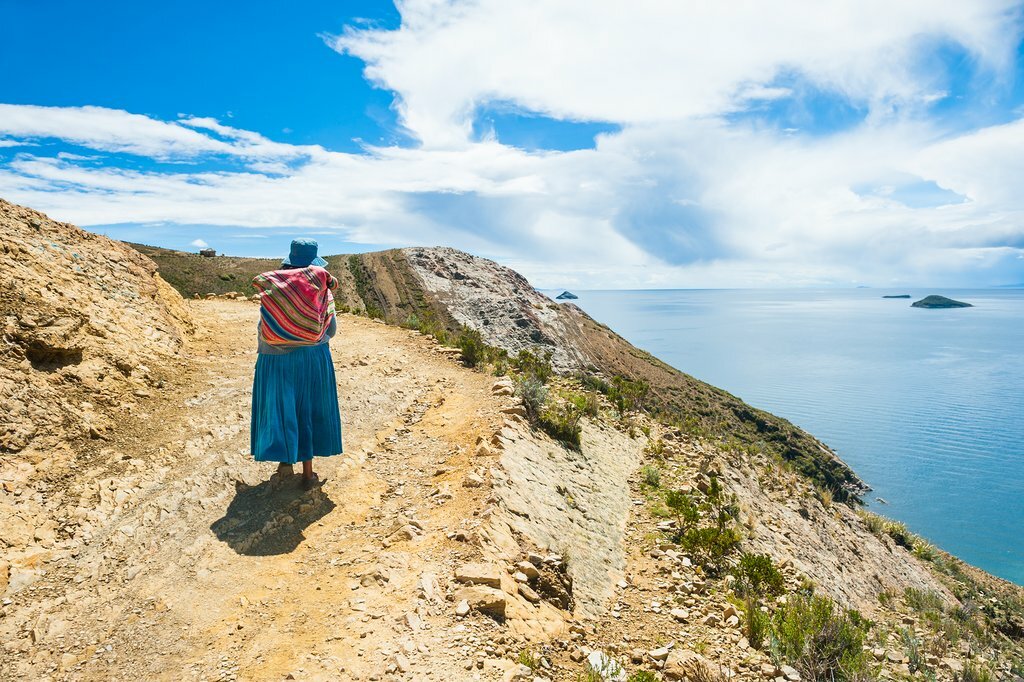
Catch an early flight out of Cusco. Welcome to Bolivia! Today you’ll have your breath taken away (literally!) at 12,000 feet (3,658 meters) above sea level in La Paz. This one-of-a-kind city is a colorful jumble of tradition and modernity where cholitas (Bolivian women in typical dress) travel in the world’s most modern urban gondola system.
Today you’ll have time to explore the popular Witches’ Market, where you can purchase medicinal herbs, and visit the San Francisco Cathedral, one of the oldest cathedrals in the city. You’ll see the main square, Plaza Murillo, and enjoy a cable car ride replete with panoramic views of La Paz. Venture out to a restaurant in the evening for your first taste of traditional Bolivian cuisine.
Day 5: See the Uyuni Salt Flats
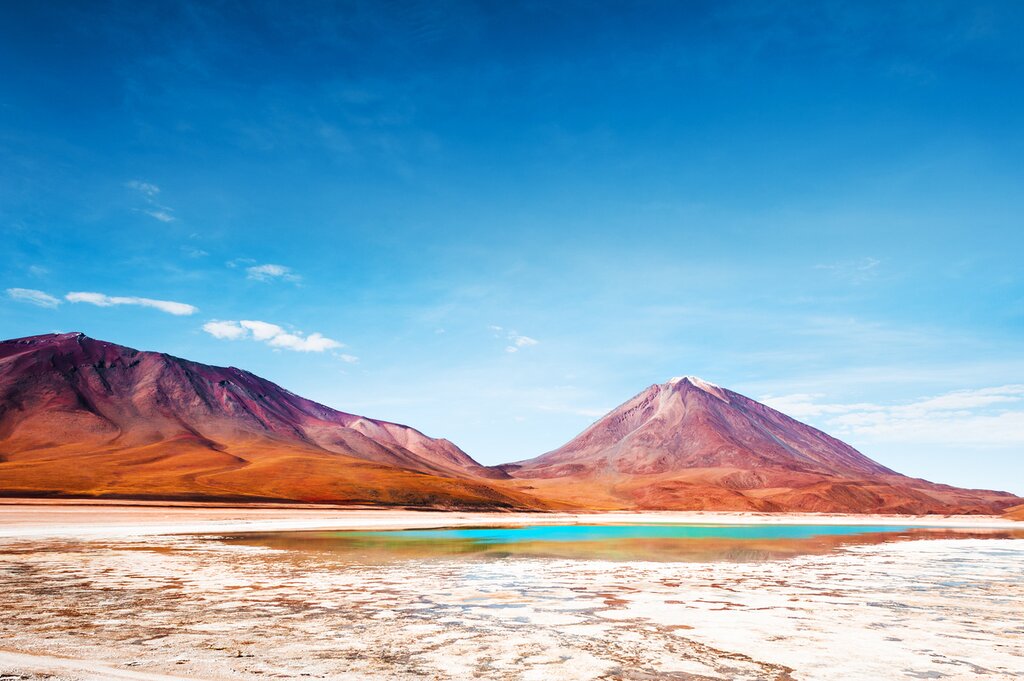
First thing in the morning, you’ll fly to Uyuni for an unforgettable excursion through the Salar de Uyuni salt flats. Start by visiting Uyuni’s small salt museum (which was constructed with salt). Then you’ll continue to tour the immense white expanse of the salar, or salt flat, stopping for one-of-a-kind photo ops as you go. Then you’ll walk around the otherworldly Incahuasi Island. Covered in enormous cacti, it boasts amazing views of the flats.
Continue onward to the salt-harvesting village of Colchani to see how the locals produce salt. Finally, you’ll visit the famed “train cemetery” that’s filled with rusting train cars once used to transport minerals and people to and from Uyuni. You’ll fly back to La Paz in the evening.
Day 6: Walk Around the Ancient City of Tiwanaku
After breakfast, travel to Tiwanaku, known as “the Cradle of American Man.” This archaeological site is among the oldest in Andean history. Located near Lake Titicaca and partly surrounded by mountains and hills, the ancient city was built almost 13,000 feet (4000 meters) above sea level, making it one of the highest urban centers ever constructed. Tiwanaku reached its peak between roughly 500 and 1000 CE when the population reached at least 10,000 people.
Only a small portion of the city, organized in a grid plan, has been excavated. You’ll visit the Pyramid of Akapana, the Temple of Kalasasaya, and the Door of the Sun. You will also observe examples of ancient craftsmanship, including pottery from ceremonial vessels to incense burners before returning to La Paz in the evening.
Day 7: Boat Cruise on Lake Titicaca
Get an early start this morning, leaving La Paz to head toward sacred Lake Titicaca. On the way, you will pass through El Alto, the second-largest city in Bolivia. Then you will travel through the altiplano, or high plain, and eventually reach Lake Titicaca, where you’ll enjoy incredible scenery along with small farms and fishing villages. Stop for a picnic lunch on your way to Copacabana, a small lakeside village with indigenous origins and important Inca ruins.
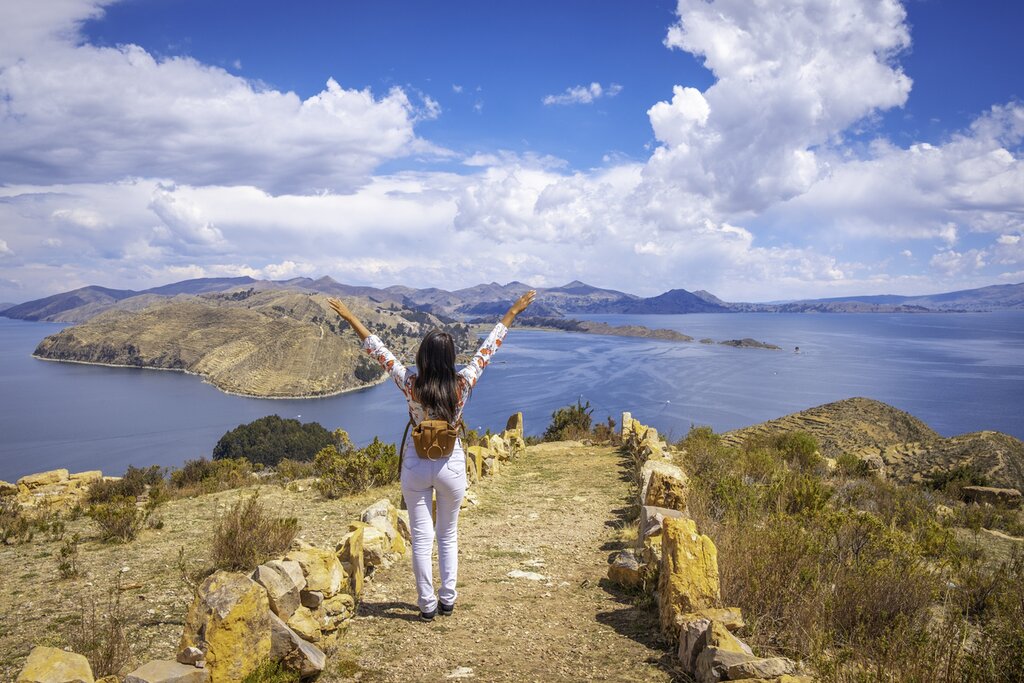
Go for a stroll around town before you walk down to the beach to catch a ferry out to the island of Isla del Sol. The itinerary continues with a visit to the island’s Inti Wata Cultural Complex to learn about traditional shipbuilding, indigenous customs, and Andean handicrafts. Then you’ll sail back to Copacabana and transfer by land to the city of Puno, where you’ll have dinner and spend the night.
Day 8: Visit the Lake's Floating Islands
Your first stop today will be at one of the floating islands of Uros. The local people live on floating manmade islands constructed out of the reeds growing in abundance around the lake. During your visit to the islands, you’ll learn about their everyday life and traditions. Have lunch at a local restaurant on Taquile Island, sampling quinoa soup and fresh fish caught in the lake, before exploring the island. There are no cars here, and very little electricity. Taquile is famous for the exquisite weavings created by local artisans and the stunning views of Lake Titicaca from its shores. Later, you’ll head back to Puno on a boat.
Day 9: Trek with Llamas Through Andean Landscapes
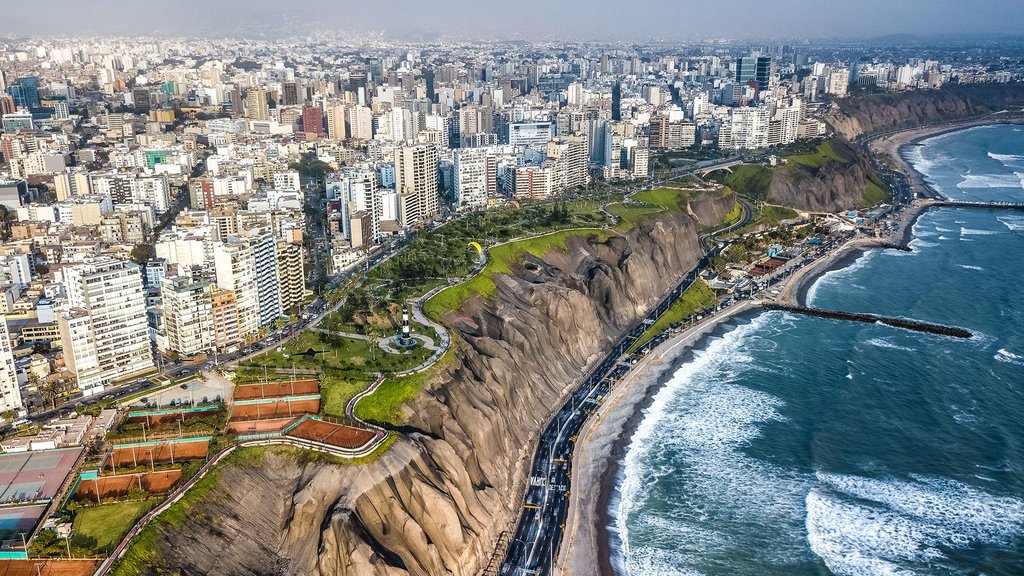
Start the day early, setting off on a scenic drive to Atuncolla. From there, accompanied by llamas, you’ll hike through the Andean landscape until you arrive at the shimmering blue lagoon of Uyumayo. Board a traditional boat to cross the lagoon on your way to Necropolis Sillustani. The pre-Inca “dead city” is a complex of volcanic stone tombs. In the evening, you’ll travel to Lima and enjoy a night out on the town before the trip comes to an end.
Day 10: Depart Peru
Make your way to the airport to catch your flight out. Safe travels!
Included meals: B=breakfast; L=lunch; D=dinner
What's Included
Included
- English- and Spanish-speaking guide
- Entrance tickets as per itinerary
- Accommodation
- Trekking staff (if applicable)
- Camping equipment (if applicable)
- Meals as specified in the itinerary
- Transportation as per itinerary
- Airport transfers (if specified)
Not included
- International or domestic flights
- Travel insurance
- Tips
- Personal expenses
- Optional tours or additional entrance tickets
- Personal equipment
What to Bring
What to Bring or take fo Day Hiking and Technical Equipment for Climbing Expedition
This equipment list is compiled to provide you with adequate help when choosing your equipment for a climb. Most items are required. Please consider each of them and make sure you understand the function and exclusive use for mountaineering, before substituting or removing items from this list. Please note that this list has been carefully annotated by the organizer. Remember that mountaineering, climbing or mountain expeditions tours is an extreme, risky sport, therefore everything related to it is of great attention.
Equipment Trekking
 Hiking backpack for hiking 50 to 60 liters
Light gloves for hiking or (Optional Mittens waterproof)
Medium weight socks
Sleeping bag (-15º to 20ºC)
Small daypack for one day hiking 30 liters
Weather-appropriate clothing (think moisture-wicking and layers)
Hiking boots or shoes
Medium weight parka with fibber fill or down
Rain poncho (or rain gear)
Long-sleeved shirts
Fleece or Wool sweater and/or trousers
Lightweight pants
Cotton short-sleeved shirts or t-shirts
Water bottle for hiking or trekking
Strong waterproof duffel bag
Flashlight with spare batteries and bulb
Towel for personal hygiene each participantFirst-aid kit
Regular and long underwear
Knife or multi-tool
Light cap and wool hat
Sunglasses with UV certification, Sun block, lips
The rest of the list Essentials as appropriate for your hike
Grooming and personal hygiene kit
One Hiking Buff per person
Equipment Mountain
3 Locking carabiners, we recommended per person
We recommend 2 ice screws for each client
1 Daisy Chain (Life Line) per each person
2 Ice axes (per person) technical, we recommended GRIVEL company
1 ATC descender (Rappel), this is very necessary for technical mountains
2 Cords for prusik, very important (Size Cord 6 mm x 10 m. long)
Gloves(Good gloves) for expeditions over 6000meters
Harness for climbing
Sleeping pad / Mattress, we recommend with air or inflatable mattress
Crampons, we recommended GRIVEL company
Walking sticks – Trekking Poles (optional), a pair per person, we recommended GRIVEL company
Down Jacket for expedition
Very important to have personal clothing such as pants and jacket with GOROTEX certification
First aid kit, for high mountains, because we as guides cannot medicate clients
Backpack Capacity 60 liters, it is better to have a bigger backpack to go comfortably to the high camps, because here you have to carry all your personal things
Gaiters or Leggings, now modern boots already have built-in (Incorporated), but better to have an extra pair
Dressing appropriately for the mountains can make the difference between a pleasant trip and a really uncomfortable one. Clothing must provide the right degree of temperature, perspiration and be well ventilated. Preferably cotton clothing should be avoided, as in humid conditions they absorb body heat.
In general, the weather conditions in in the Andes of South America can vary from day to day and even throughout the day. Therefore, clothing must be versatile.
Please do not hesitate to contact us with any questions you may have regarding the necessary equipment.
Prices & Dates
FROM/TO
PRICE (USD)
TRAVEL STATUS
- Single Supplement (I want my own room and tent) – $000 on request.
Please note: Insurance for emergency evacuation is required for this trip. Call for more details.
» Additional dates available upon request
» Rates may vary from July 26th to 31th for the national holidays
Prices (per person):
| 1 PAX | 2 PAX | 4 PAX | 6 PAX | 8 PAX | 10 PAX | 12 PAX | 14 PAX |
|---|---|---|---|---|---|---|---|
| — USD | — USD | — USD | — USD | — USD | — USD | — USD | — USD |
Deposit for reservations
— USD (– EUR) ✓ Full payment 40 days before. No refund if you cancel less than 30 days!
Places:  *Available
Trip-code: Number ►BOL-000
Duration: 1 day
Participants: Minimal: 2 Maximal: 15
Members: We don’t have an open group to join – We can open a new group – Contact us!
Country / Location: Bolivia
Mountain Guide: Eric Raul Albino Lliuya
Other dates / additional info: Contact us!
3% early bird discount when booking 6 months prior to departure 2024
Legend Booking-information:
EZZ Single room supplement
🟢 On this trip, places are still available.
🟡 On this trip, only a few places left.
🔴 This trip is sold out / closed.
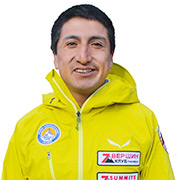
Eric Raul Albino Lliuya
Expert guide certified by AGOMP
General Sales Manager of Peru Expeditions
- WhatsApp: +51 943 081 066
- E-Mail: office@peru-expeditions.org
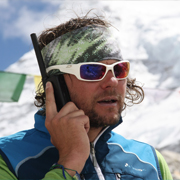
Hans Honold | Certified Mountain and Ski Guide
For a trip with a Professional Certified Mountain Guide from abroad with your own language that you speak, please request us to get in touch. We have guides working for our company from all over the world who are members of IVBV/UIAGM/IFMGA Certified Guides.
- Tel: +49(0)7344 929144-0
It is very important to have accident coverage for trekking and climbing mountains, more if you go a technical mountains over 6 thousand meters, we oblige and recommend buying travel insurance with our partner Global Rescue, you get the peace of mind that the finest medical, security evacuation, field rescue, intelligence and telehealth.
- Tel: +1 (617) 459-4200
Only $1000 deposit to book
Pay over time, interest free
No booking fee, no change fee
24/7 support
Accommodations
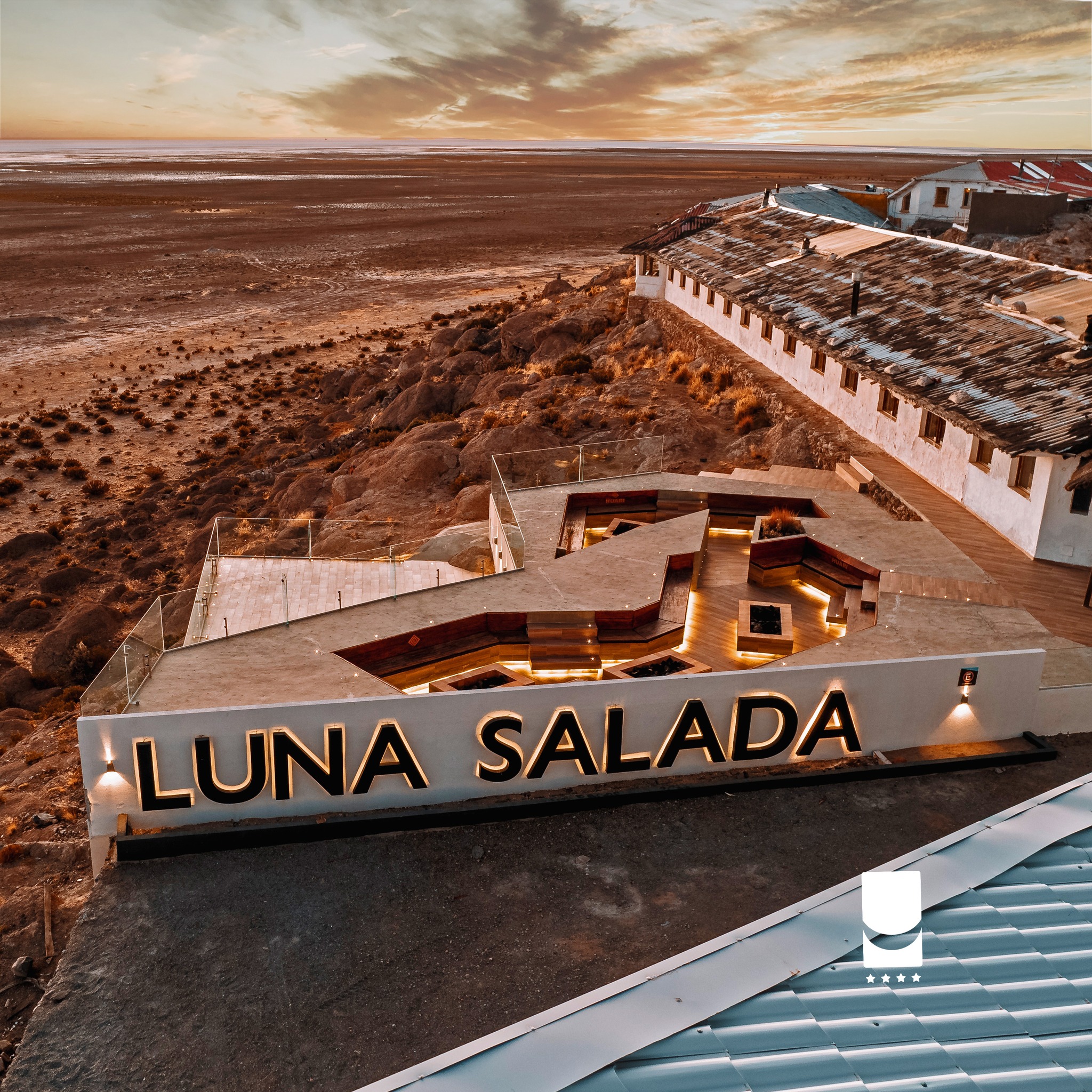
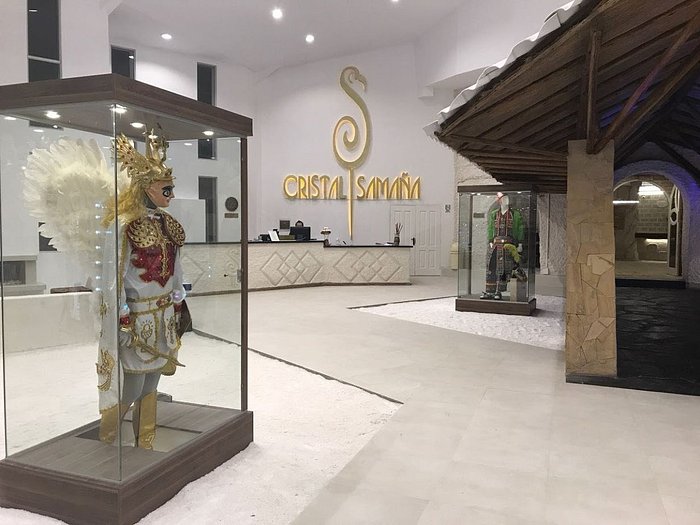
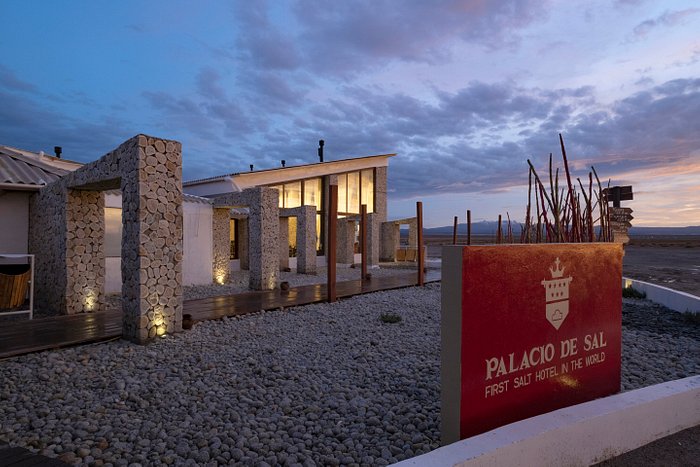
Scroll through our exclusive accommodations for this trip below. Although very unlikely, we will be able to make substitutions when necessary. The comfortable accommodations that guests stay in every night offer comfort, the level that these options are are 3 stars and some hostels in some towns of first class quality to make your stay very pleasant.
*These exact accommodations are not guaranteed. In some cases, alternative accommodation of similar quality and location can be used.
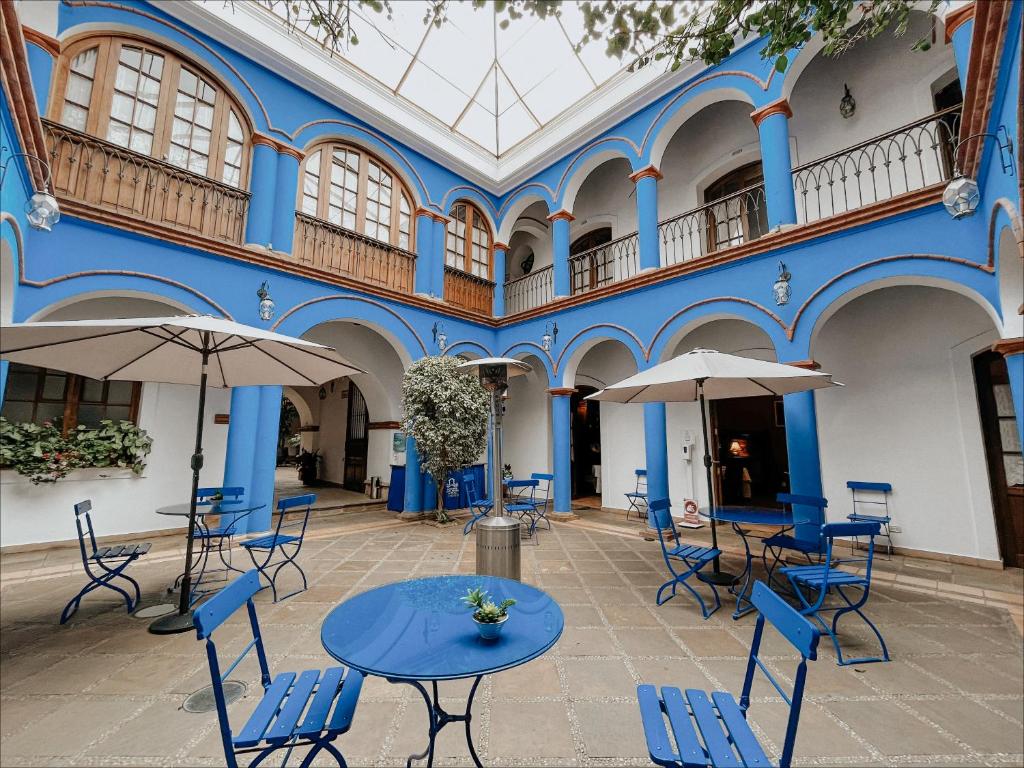
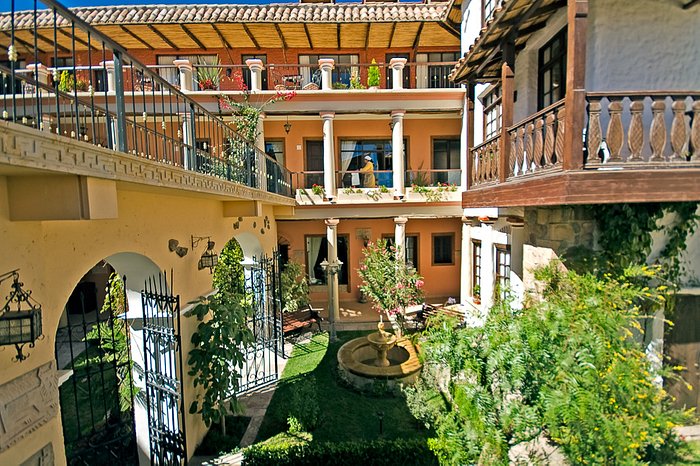
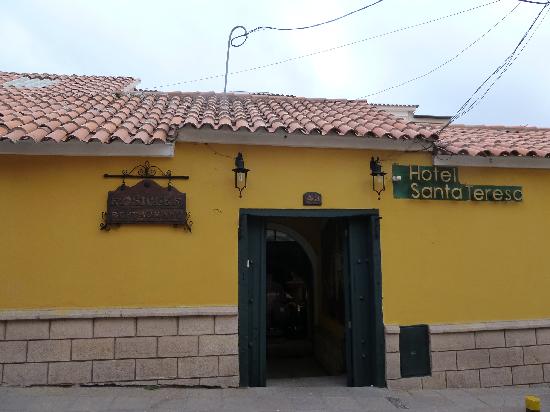
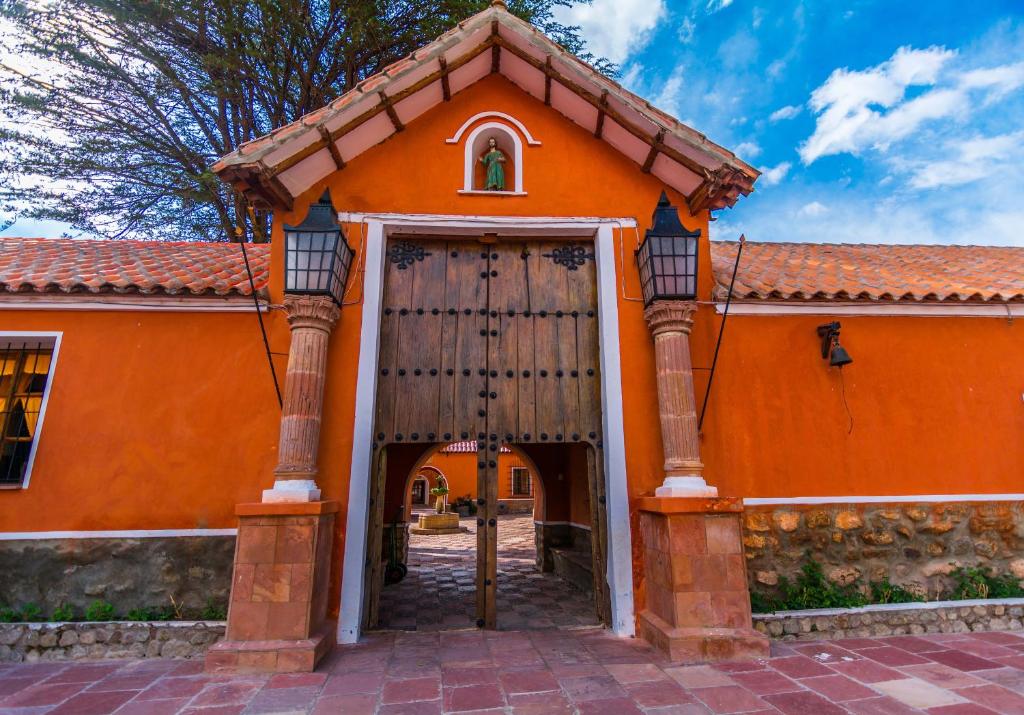
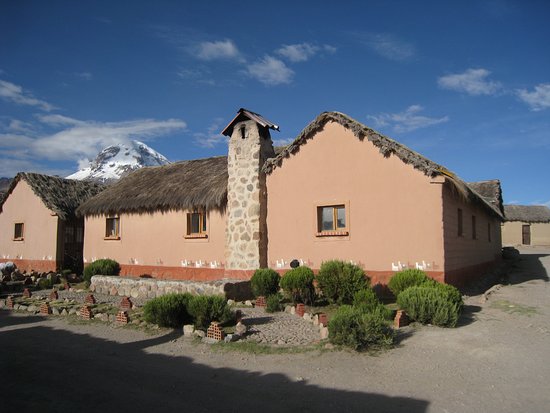
Albergue Ecológico Tomarapi
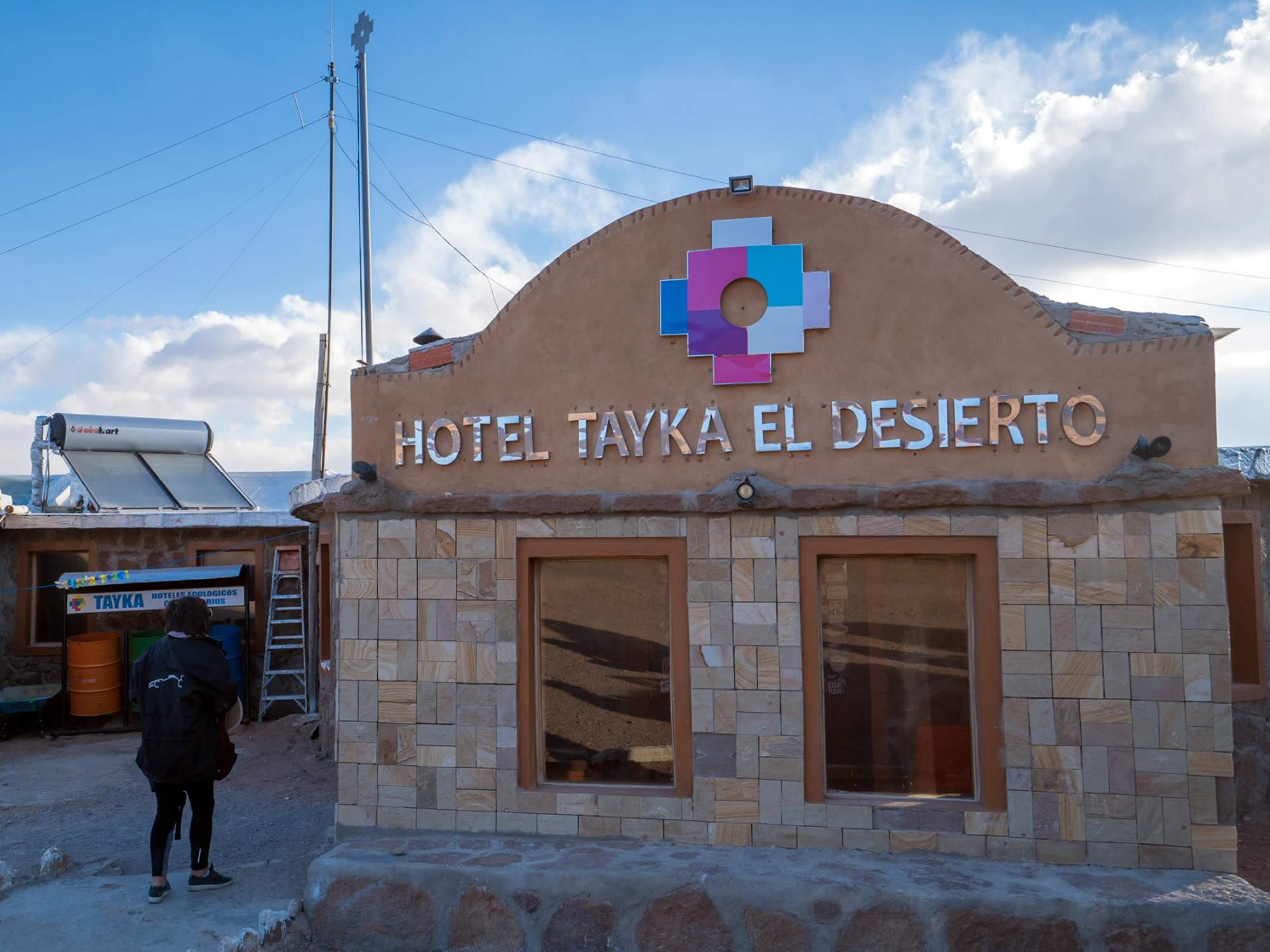
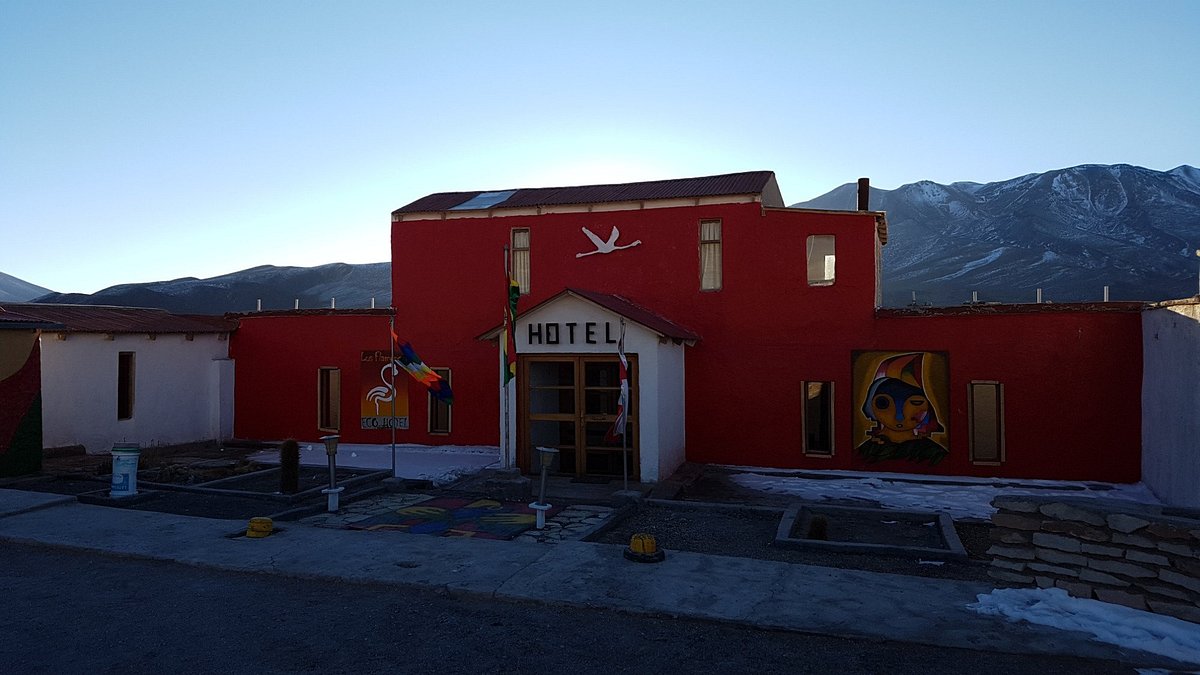
Hoteles Taykas
Videos
Frequently Asked Questions
What our travelers or clients always ask questions before joining our trips, tours & expeditions, read all the information provided here.
Suggested FAQs
What experience and how fit do I need to be to climb this mountain? Is this program suitable for children or older people?
For our mountain climbing trips: If they are easily accessible mountains: For easy-climb mountains, well, you don’t need much experience, but if you already want to climb mountains above 6,000 meters and the conditions become more difficult, we recommend if you already want to go through mountains above 6,000 meters, have a basic or intermediate course for a good preparation. It is very important to be physically, technically and psychologically prepared.
Regarding the preparation of children: Everything will depend on which mountain you want to climb with your children, once you are clear on which of our tours or mountains you want to go with your children, we can give you some advice or see how to prepare them before going with they.
Regarding older people: It all depends on the condition of experience and how well the person is in health, on many occasions older people are the best to walk in the mountains because they have more experience, so it is always good to ask and find out about their experience of older participant. If you have any other questions, please contact us. For calls or inquiries to this number: +51 943 081 066
Will I need to bring any technical equipment of my own? Is it possible to rent equipment, and if so, what would be the approximate cost of that?
In all our trekking or mountaineering trips we do not include personal equipment in our prices, so you have to have your own equipment: Personal equipment (such as boots, ice ax, crampons, harness, sleeping bag, mat, Goretex, etc. ) and also within each page of the trips that we sell is a small list so you can see it on our website.
Our company can also rent the materials that you would need for your trip, see the list here on our website: https://peru-expeditions.org/equipment-rental/ . For calls or inquiries to this number: +51 943 081 066
Are there any other special requirements such as permits/insurance/vaccines that I need to consider before the tour?
Safe and effective vaccines are available that provide strong protection against serious illness, hospitalization and death from COVID-19. Billions of people have been vaccinated against COVID-19. Getting vaccinated is one of the most important things you can do to protect yourself against COVID-19, help end the pandemic and stop new variants emerging.
We also recommend having accident insurance, we always recommend. We are Partners –Global Rescue. If you have any other questions about the trip we can schedule a date for a calling via WhatsApp. For calls or inquiries to this number: +51 943 081 066
What experience do I need to have? How fit do I need to be? Is this program suitable for children or older people?
To do long-distance hiking you need to at least train or do some tours such as visiting lagoons to get the experience and feel comfortable with what you do, it is always good before doing a long-distance hiking tour to test yourself so as not to be with the problems of altitude sickness during the trekking, and if you travel with children it is good to first train them before taking them, if they are accompanied by an adult of legal age, they must do a good acclimatization before going on the long-distance tour or with high altitude camps If you want to know or learn more advice, we can schedule a call via WhatsApp to clarify your doubts. For calls or inquiries to this number: +51 943 081 066
How far in advance should I start training and what kind of training do you suggest?
The preparation is according to what type and what technical level you want to go and climb a trek or mountain, the preparation will always gain experience little by little.
For this type of demanding or technical climbing sports, it is recommended to do some summits above 5 thousand meters beforehand and have good knowledge of high mountain technical equipment such as the use of technical ice axes, ice screws, correct use of crampons, and of course all the technical material. For more information, we can schedule an appointment to be able to explain in more detail everything about the mountain equipment and the preparations prior to joining our outings. For calls or inquiries to this number: +51 943 081 066
What is the average distance and altitude gain that we will hike each day?
Every day we have active walks around approximately 4, to 5 sometimes 6 hours of walking, everything is according to your pace and physical condition of each person, in each of our travel programs you will find more detailed information, and if If you need more information about each day of the travel program, we can schedule a call via WhatsApp to clarify your doubts or questions, for this please contact us. For calls or inquiries to this number: +51 943 081 066
Will there be porters to help to carry group and personal equipment?
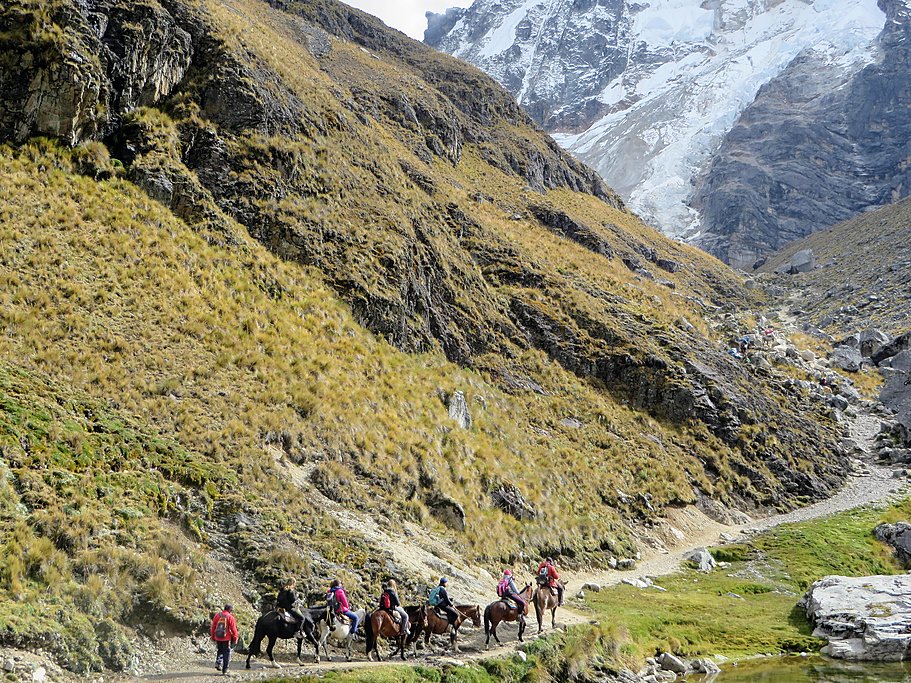
In our trips, either hiking or mountaineering: Depending on the type or destination of the trip that you are going to book, in some parts of the treks you go with mules or donkeys or sometimes with horses, and within the mountain trips, the approach camps are also They go with mules or donkeys, but there are some stretches where pack animals can no longer reach. In this part, our logistics is fully supported by the porters.
Who are the porters? They are people from the area who were born and live in the heights of the towns, they are very strong and are very acclimatized, the reason is that after the tourist season ends they dedicate themselves to agriculture and livestock for that reason they are people They are used to the altitude and have lived in nature all their lives and they are happy to be in the mountains together with our expeditions. For calls or inquiries to this number: +51 943 081 066
How will accommodation and meals be handled during the trek?
About accommodation or meals during the tour: Well, depending on the type of tour, when the tour is a classic cultural tour or a city tour, we eat during the route in tourist restaurants and sleep in category hotels that the client has requested.
If the tour is with camps and trekking: During the activity, logistics we include the service of Breakfast, Lunch, and Dinner with traditional and typical meals of the region where you are going to travel with us, during the night we stay in tents, and we have a special tent for the kitchen and another for the dining room.
If the trip is at altitude or in the mountains: We bring special high mountain food, It are quicker meals to cook and we provide complete logistics such as Breakfast, Lunch and Dinner, and we sleep in special 4-season high mountain tents, with the best tents. If you have any questions or concerns, we can schedule an appointment via Whatsapp to clarify all your doubts and give you better information so that your trip is an unforgettable tour.
What is the guide-to-client ratio to climb this mountain?
In mountains above 5000 meters: A local guide takes a maximum of 3 clients = Ratio 3pax = 1 local guide
In technical mountains: In large-big mountains we manage the travel policy, a guide and a maximum of 2 clients = Ratio 3pax = 1 local guide. For calls or inquiries to this number: +51 943 081 066
What is the best time of the year to climb this mountain?
For all the trips that we offer within our main tourist destinations such as South America and Central America, also including the ascent of the 7 continents and the 7 highest peaks of each continent, on each page of our website for each trip we indicate that month or what season to travel, then please read the information you find in our travel offers for each tour. If you have any other questions you can contact us by WhatsApp with one of our travel experts. Thank you so much. For calls or inquiries to this number: +51 943 081 066
Do I have what it takes to succeed on this expedition?
In the interest of the team’s enjoyment and success, we work with every single guest to ensure they are properly prepared and ready for this expedition. We pride ourselves on vetting every member to make sure that the team can bond and succeed together. It really sucks to be grouped with members that are much faster, or much slower, than you are. No one wants to the weakest link on a trip like this. By setting expectations and a solid training plan, we work to insure maximum cohesive success. Use this trip as an exercise motivator, and we will succeed together with style.
How can I get to the trailhead/meeting point?
For the pick-ups of each trip, depending on the place or the trip that you are going to make with us, the meeting point is always at our office, in one of our trips we pick you up where you are staying or staying, or in some cases a A representative of our company will pick you up and then ship you to your transport to continue with your destination of the tour or trip you have booked with us. If you wish to request more information, do not hesitate to contact us. For calls or inquiries to this number: +51 943 081 066
What is the best time of the year for this hike?
For all the trips that we offer within our main tourist destinations such as South America and Central America, also including the ascent of the 7 continents and the 7 highest peaks of each continent, on each page of our website for each trip we indicate that month or what season to travel, then please read the information you find in our travel offers for each tour. If you have any other questions you can contact us by WhatsApp with one of our travel experts. Thank you so much. For calls or inquiries to this number: +51 943 081 066
What happens in the event of bad weather?
About the meteorological conditions of the climate, we try to organize the trips of each tour in the best season to have the best views and enjoy the selected trip but sometimes even is good season we can have bad weather, in this case on hiking or treks trips The complications are minimal, but when this happens during high-altitude climbing expeditions, the complications can become very difficult, that is why the bosses or leaders of the local guides must always make the most correct decision for the safety of our passengers, so we always recommend listening to the best advice from the local guide assigned for each tour. If you have any other questions please contact us. For calls or inquiries to this number: +51 943 081 066
Can I join a group?
We as a local company and connoisseurs of tours have departures on different dates. The best thing to do is to join a travel group to take care of your budget, and of course you can join our groups, but on trips like mountaineering we recommend going in small groups. To join a group, ask us for the dates and we will send you the necessary information to be able to join any of our trips.
Why go in a private trip: For trips whether trekking or high mountains, going privately is the most recommended option, but the costs are more expensive. So, if one joins a group, the prices will be more reasonable. In the mountains, the only disadvantage is if you are in a wall with another partner and if one of the participants gets tired or gets sick. In this case, you have to abort or cancel the summit and return together. For more information, contact us. We can schedule a call via WhatsApp to clarify all your questions.
In a mountain, for example, if 3 people go and one of the participants falls ill on the route, for security reasons they have to cancel or abort the summit or return all together. The same in a technical mountain if the climbing partner gets sick they all have to return, for these reasons sometimes it is better to go private only because for a single person the costs are more expensive for the same reason that the trip would already be private .
For more information please contact us. For calls or inquiries to this number: +51 943 081 066
 The company Peru Expeditions Tours has the most experience in organizing commercial ascents and complex high-altitude expeditions.
  We have the most experienced and qualified guides for cultural trip, climbing tours, MTB tours, Ski tours, including famous climbers.
 We always give away team jerseys-T-shits, buffs, or a cap as a gift
 Good own personal tents to live in height and special big tents to dine inside the trekking or mountain.
 The highest percentage of successful ascents.
 We provide the best living and eating conditions. We take into account the peculiarities of nutrition (you can order a vegetarian menu).
 Free conferences in the office with own videos material and photographs